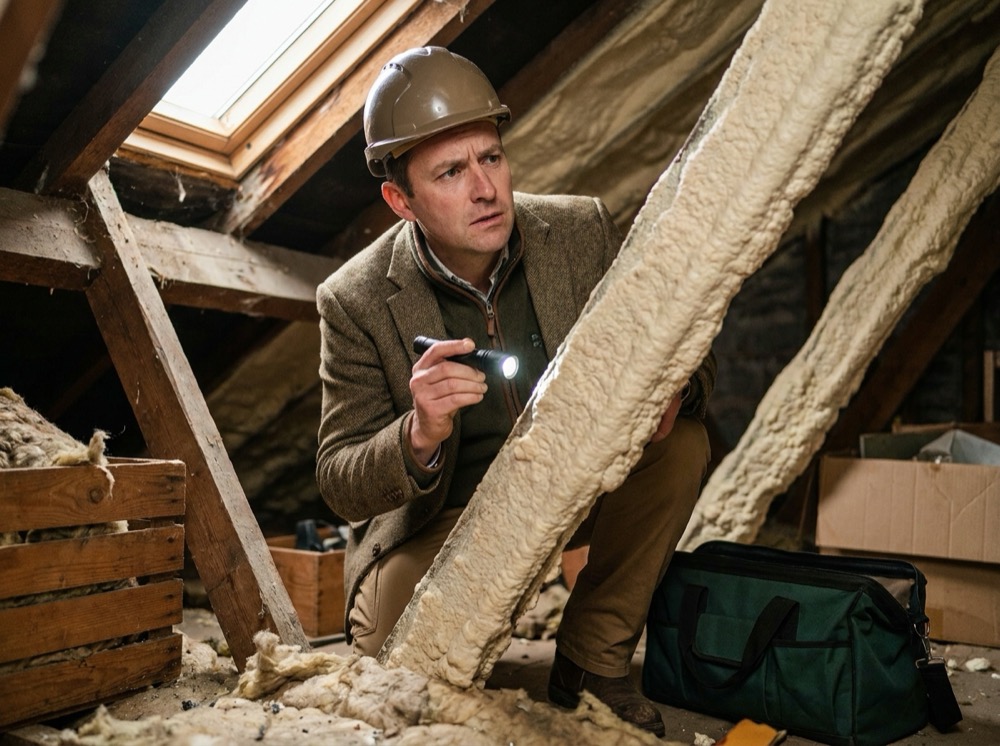
A mortgage survey comes back with spray foam flagged, and the next line reads something like 'the lender requires certification that the roof is safe to proceed'. So you go looking for a company that can certify it. Here's the awkward truth: none can, not in the way that sentence suggests. What they can do is produce the evidence that lets your lender's valuer say yes. That's a different job, and knowing the difference is what gets a flagged survey moving again.
Key takeaways
- No removal company can certify your mortgage will proceed. The lender's valuer decides, and they decide on evidence, not on a certificate's wording.
- The fix has two parts: complete removal of the foam, then an independent inspection of the exposed timbers, both documented with photographs and disposal records.
- From flag to a resubmitted application is typically two to three weeks: survey, one to three days on site, inspection and evidence pack, then back to the lender once.
What does a spray foam flag on a mortgage survey actually mean?
It means the valuer couldn't do part of their job. Spray foam bonds to the underside of the roof, so the rafters and battens can't be inspected for rot, movement or damp. Surveyors call it an inspection limitation, and a lender can't price a risk its valuer can't see.
What follows depends on the lender. Some decline outright. Some defer the application until the foam is gone. Some down-value the property, and in the worst cases return a zero valuation, which means they'll lend nothing against it as it stands. The BBC's 2024 research found roughly a quarter of the biggest lenders wouldn't lend on affected homes at all, with others deciding case by case on the valuer's report; our summary of which lenders accept spray foam has the detail, with the caveat that policies change.
Whichever version you've received, the flag isn't a verdict on your house. It's a request for evidence the valuer doesn't have yet. Our guide to spray foam and mortgages covers the lender side in full.
Can a removal company certify the roof is 'safe to proceed'?
No. And any company that says it can is telling you what you want to hear.
Here's why. There's no official UK standard or certificate for spray foam removal. The HomeOwners Alliance puts it plainly in its spray foam guidance: it is "unable to recommend removal companies" because of "the absence of a trade association or standards for removing spray foam". A removal certificate is a statement by the firm that did the work. Your lender's valuer isn't bound by it, and lender criteria differ from one bank to the next.
What a good removal company can do is take the inspection limitation away. Strip the foam completely, so the timbers are visible again. Document the roof before, during and after. Arrange an independent inspection of the exposed structure. Record where the waste went. Hand all of that over as one pack. The valuer then looks at a roof they can see, backed by evidence they can check, and makes the call they couldn't make before.
So when a quote promises "lender-approved certification" or "100% acceptance", read it as a red flag rather than a reassurance. We've written up the warning signs on removal certificates separately, and the question of whether an official removal standard exists gets its own answer too.
The two-part fix: complete removal, then an independent inspection
Think of it as two separate jobs that happen to be done in the same week.
Part one is the removal. RICS's own consumer guide warns that removing spray foam "could potentially damage the existing structure", which is why it's hand work: foam cut and scraped back to clean timber, the membrane protected where it can be, and every bag of foam disposed of under a waste carrier's licence. A removal that leaves residue, or splits the felt, creates a new problem for the valuer to flag.
Part two is the inspection. Once the timbers are exposed, someone independent of the crew that did the stripping checks them for moisture, decay, staining and structural condition, and records the findings in writing with photographs. This is the piece that answers the lender's actual question. RICS notes that a surveyor who finds spray foam "may request an independent specialist report", and the Property Care Association and RPSA publish an inspection protocol that surveyors use to assess foam in pitched roofs. The post-removal report should be prepared to the same standard those surveyors work to, so the valuer recognises what they're reading.
Together with the photographic record, the disposal paperwork and any repair invoices, that inspection report is what we mean by a lender-ready certificate and evidence pack. The certificate is the cover sheet. The inspection is the substance.
Before you commit: three things to ask your lender in writing
Every week we speak to someone who paid for a removal and still got declined, because nobody asked the lender what it actually wanted. Ask these three questions through your broker, and get the answers in writing:
- Is full removal required, or would an independent assessment of the installed foam satisfy you? The HomeOwners Alliance and the PCA both suggest an independent assessment by a PCA-member spray foam specialist as a sensible first step if you're not under time pressure. If the lender will accept that route, it's cheaper than removal. If the lender says removal, you have your answer.
- What documentation will you accept after removal? Most want a post-removal inspection report, photographs and disposal records. Some want their own valuer to revisit. Knowing which saves a second round.
- Will you re-inspect, and how is that booked? If the lender sends its valuer back, good documentation makes that visit quick and uneventful. Build it into the timeline rather than discovering it afterwards.
The PCA describes removal as "a complex and expensive process", and that's the right frame. Don't let a cold caller or a countdown timer rush you into it before your lender has told you it's needed.
The week-by-week plan from flag to resubmission
Typical timings, assuming the lender has confirmed removal is the route:
- Week one. Lender's requirements confirmed in writing. Free survey of the roof space, usually the next working day: foam type, coverage, access, condition of what's visible, and a fixed all-inclusive quote. Nothing is priced sight-unseen.
- Week one to two. Removal, typically one to three days on site depending on coverage and foam type. Closed-cell foam takes longer than open-cell. Waste bagged and removed under licence the same day.
- Same week. Independent inspection of the exposed timbers, written report with photographs, any remedial work identified and invoiced separately. Certificate and evidence pack issued, usually the day the inspection completes.
- Week two to three. Pack submitted to the lender once, through your broker, with the lender's own re-inspection booked if they asked for one.
Where a sale is mid-chain, we fast-track; the mid-sale rescue plan covers the extra steps with the buyer's side. Urgent remortgage deadlines are treated the same way.
Already had the foam removed and still stuck?
It happens more than you'd think, and it's fixable without paying for the removal twice. If the foam is gone but the lender has rejected the paperwork, the gap is almost always the inspection. A specialist inspects the roof space, confirms the removal is complete (or finishes what was left), documents the condition of the timbers to the standard surveyors expect, and issues the certificate and evidence pack. You then go back to the lender once, with something it can accept, rather than twice with something it can't.
Next steps
Get your lender's requirements in writing first. Then check your eligibility in 60 seconds using the button below and we'll book the free survey, typically for the next working day. Vetted specialists, complete removal, independent inspection, full evidence pack, and a no-fix-no-fee guarantee in writing: if your lender or surveyor isn't satisfied with the removal, we put it right at our cost. Eligible properties qualify for 20% off, confirmed at the survey.