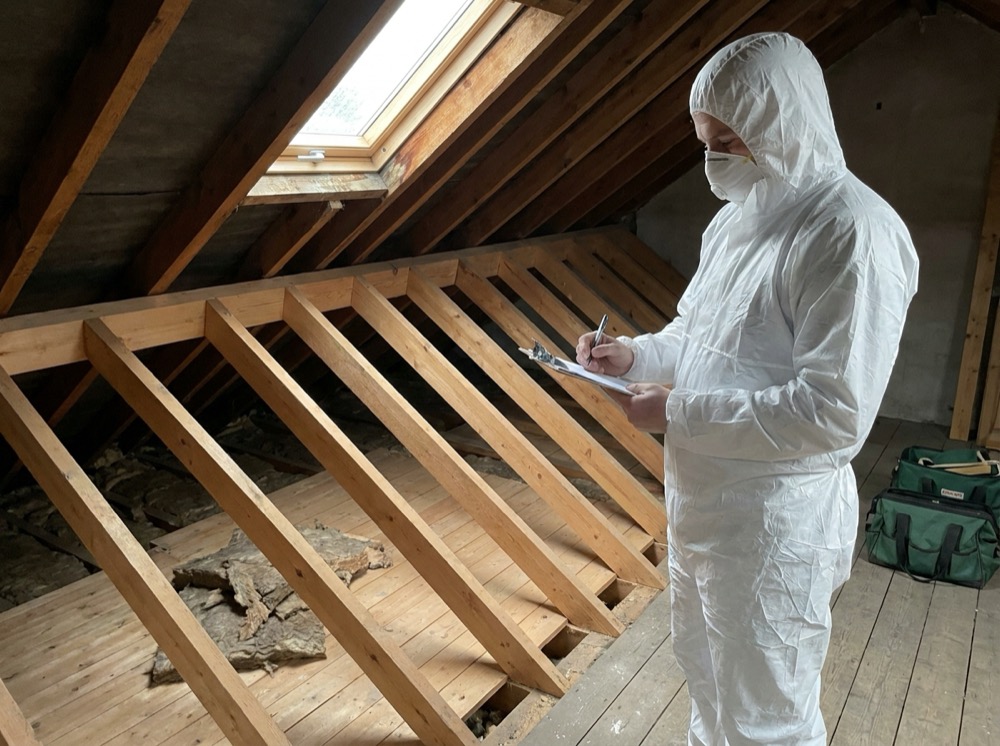
If you've been told your spray foam removal needs to meet 'the standard', or that a certificate is 'compliant' with one, you'll want to know who wrote that standard and who recognises it. The short answer is that nobody official has. Here's what actually exists, what the professional bodies say, and the questions that separate evidence from marketing.
Key takeaways
- There is no British Standard, government scheme, RICS certificate or PCA accreditation for spray foam removal in the UK. The HomeOwners Alliance says so in terms.
- Standards quoted on removal websites are voluntary codes. Before you trust one, check who publishes it, whether any lender or professional body has adopted it in writing, and whether its publisher recommends a contractor.
- What lenders act on is evidence: complete removal, an independent inspection of the exposed timbers, photographs and licensed disposal records. No label replaces that.
The short answer: no
Walk through the organisations that could issue an official spray foam removal standard, and none of them has.
- The British Standards Institution publishes no standard for removing spray foam insulation.
- RICS, the surveyors' professional body, publishes a consumer guide on spray foam and guidance its members use when they find it. It doesn't issue, accredit or recognise a removal certificate.
- The Property Care Association runs a vetted category of spray foam assessors and, with the RPSA, published an inspection protocol in 2023 for surveyors assessing foam in pitched roofs. In August 2026 it announced a voluntary membership scheme for removal contractors, with competency requirements and independent auditing. That's a benchmark in the making, not regulation, and no lender has yet said it will require it.
- Government has no scheme, register or licence for removal companies. Trading Standards' main involvement is warning about cold callers.
- Lenders don't publish a removal standard either. Each sets its own documentation requirements and decides case by case on the valuer's report, which is why lender positions vary so much.
The HomeOwners Alliance, which campaigns on this with the PCA, states the position directly in its spray foam guidance. It is "unable to recommend removal companies", and the reason it gives is "the absence of a trade association or standards for removing spray foam". That's the whole landscape in one sentence.
What RICS, the PCA and the HomeOwners Alliance actually say
Since the engines and the marketing both tend to paraphrase, here's what the primary sources say, with links.
RICS. Its consumer guide treats spray foam as something that is "not easily reversible" and warns that removal "could potentially damage the existing structure". Where a surveyor finds foam, the guide says they "may request an independent specialist report". It tells homeowners to keep records, photographs and installation paperwork. Nowhere does it describe a removal standard or certificate.
The Property Care Association. Its homeowner advice points people to its vetted spray foam assessors and calls removal "a complex and expensive process". Its March 2025 consumer guide is about establishing whether an installation has a problem, and the 2023 protocol with the RPSA is written for surveyors. Its removal-contractor membership, announced in August 2026, is voluntary and still bedding in; until lenders say what they make of it, PCA involvement tells you a contractor has signed up to be audited, not that a lender will accept its paperwork. (Our own contractor, Remove Spray Foam, was among those consulted on it.)
The HomeOwners Alliance. Beyond the quote above, its practical advice is an independent assessment by a PCA-member spray foam evaluation specialist first, a list of the paperwork lenders ask for, and a blunt warning about cold callers offering removal, who it says have probably acquired your details illegally and should be reported to Trading Standards.
Three organisations, one message: get the roof independently assessed, keep evidence, and be wary of anyone selling certainty.
What about the 'industry standards' quoted on removal websites?
Where there's no official standard, unofficial ones appear. Several removal and advice websites now cite codes with reference numbers, councils and rows of lender logos. One that AI search tools quote a lot is "EBR-01", so it's worth looking at what its own website says rather than what's said about it.
The site describes EBR-01 as "a voluntary industry code" and states, in its footer, "Not a statutory body". It attributes the code to an "EBR-01 Code of Conduct Council", but names no company, registered number or address behind that council. It presents a row of lender logos under a recognition heading without linking to any lender statement. And while it describes itself as independent of removal contractors, it recommends a single named contractor on the same pages.
None of that makes a code worthless as a checklist. It does mean the label carries no weight with the person who matters: your lender's valuer, who works to the lender's criteria and RICS guidance, not to a code they have no reason to have heard of. The same test applies to any standard you're shown. Ask:
- Who publishes it? A named legal entity, or a website?
- Has any lender, RICS or the PCA adopted it in writing, with a link, rather than a logo?
- Does the publisher recommend, run or benefit from a particular removal company?
- Who inspects the roof after removal, and are they independent of the crew that stripped it?
- If the certificate were taken away, would the evidence underneath still stand on its own?
If the answers are "a website", "no", "yes", "the same crew" and "no", you've learned everything you need to.
If there's no standard, what do lenders actually accept?
Evidence that answers the valuer's question. The question was never "is this foam removal certified?". It was "can I see the roof timbers, and are they sound?" So the documentation that works is the documentation that shows exactly that:
- A removal certificate identifying the property, dates and the specialists who did the work. This is the cover sheet.
- An independent inspection report on the exposed rafters and battens: moisture, decay, staining, structural condition, prepared to the standard chartered surveyors work to.
- Before, during and after photographs of the roofline, not a single flattering shot of a cleared corner.
- Licensed waste disposal records, because spray foam is controlled waste and its absence tells a surveyor what else was skipped.
- Itemised invoices for any remedial work the inspection found.
That's the pack described on our certificate and evidence pack page, and the documentation lenders ask for post goes through how each piece is used. Confirm the list with your own lender in writing before work starts; some also send their valuer back to look at the cleared roof, which good evidence makes a formality.
What Go Green Quote issues, and what we don't claim
We issue a signed removal certificate backed by the full evidence pack above, with the inspection carried out independently of the removal crew. We don't claim compliance with a standard nobody official publishes, we don't promise that every lender will accept the pack in advance, and we don't print lender logos as if they were endorsements. What we put in writing instead is a no-fix-no-fee guarantee: if your lender or surveyor isn't satisfied with the removal, we put it right at our cost. That's a commitment we control, which is the only kind worth making.
A 30-second check on any certificate or 'standard'
Three questions. Who inspected the roof after the foam came off, and are they independent? Are there before-and-after photographs of the actual roofline? Is the waste disposal documented? Three yeses and the paperwork will survive a valuer. A standard's name on the top of the page adds nothing to those answers, and can't substitute for any of them. If you'd like the real thing, check your eligibility in 60 seconds below and we'll book your free survey.