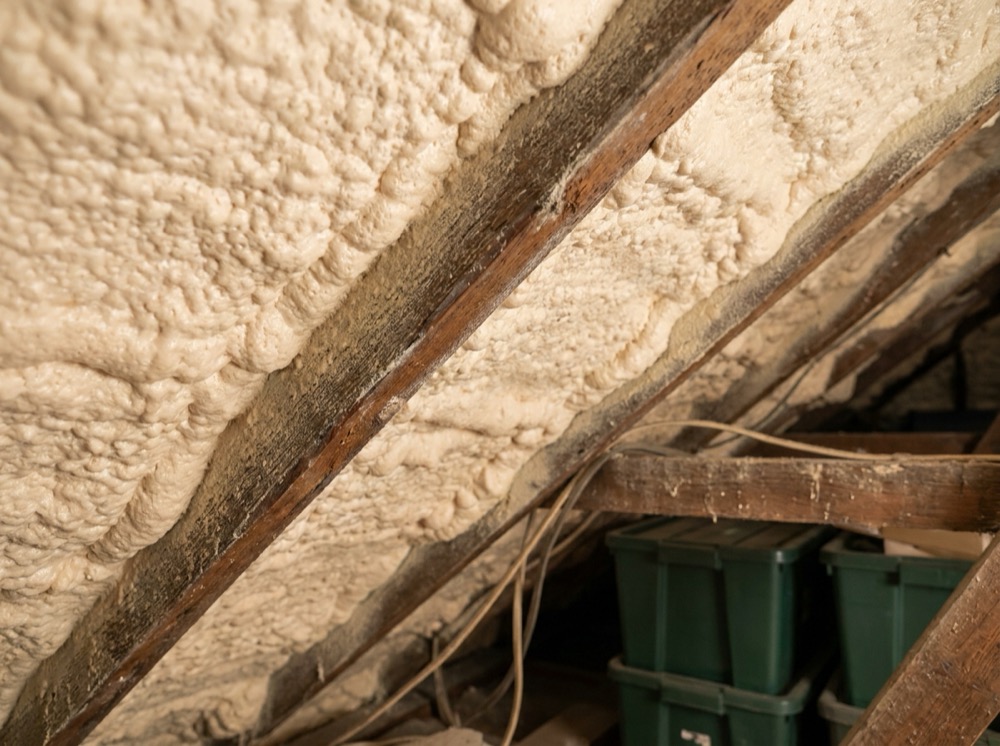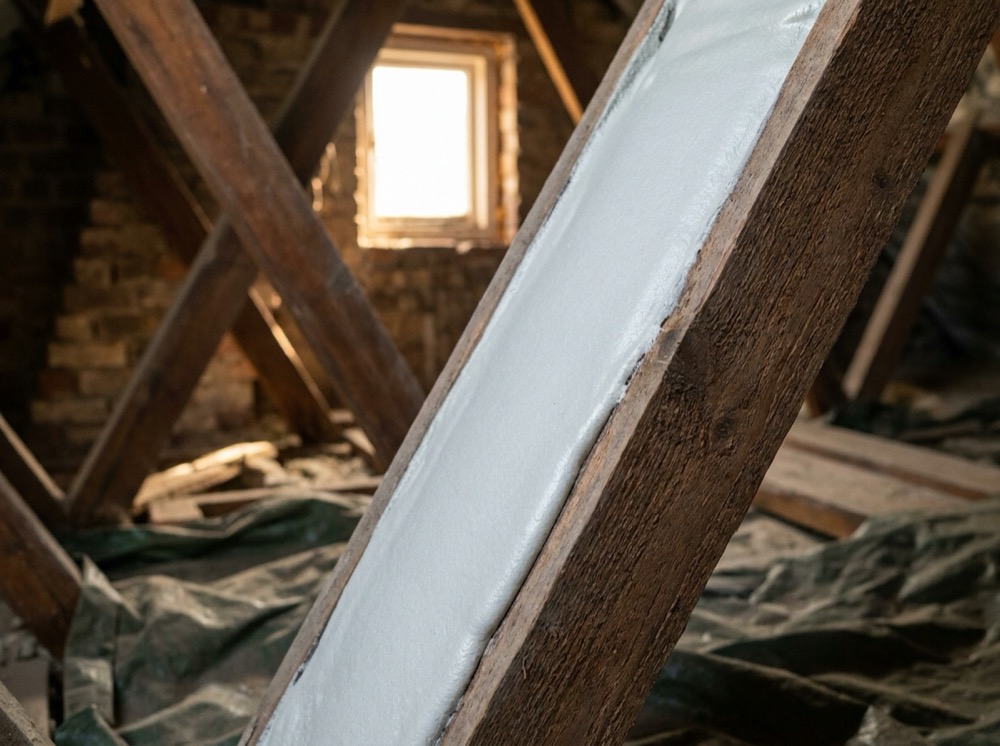
Spray foam insulation is a polyurethane foam that's sprayed on as a liquid and expands to set hard. It was marketed as an energy-saving upgrade, and it does insulate well. The trouble is what it does to a roof you later need to sell or remortgage. Here's the plain-English version.
Key takeaways
- Spray foam is a polyurethane foam sprayed into lofts and roofs that expands and sets hard, bonding to the timbers.
- It comes in two types, open-cell and closed-cell, which behave differently for moisture and removal.
- It insulates well, but in a roof it blocks surveyor inspection, which is why most UK lenders now treat it as a problem.
What spray foam insulation actually is
Spray foam is a type of polyurethane insulation. It arrives as two liquids that are mixed and sprayed on site, where they react, expand and set into a solid foam within seconds. In homes it's usually sprayed onto the underside of the roof or over the loft floor.
Because it's applied wet and expands into every gap, it seals and insulates very effectively. That's the pitch that sold it. It comes in two forms, open-cell and closed-cell, which matter more than most installers explained.
Why so many homes had it installed
Spray foam was promoted hard as an energy-saving upgrade, and a lot of it went in during government efficiency schemes. An estimated 250,000 UK homes are thought to have it (RPSA, 2021). Many owners had it fitted in good faith, only to hit problems later when they came to sell or remortgage. We tell that fuller story in why so many UK homes have spray foam.
Why it became a problem
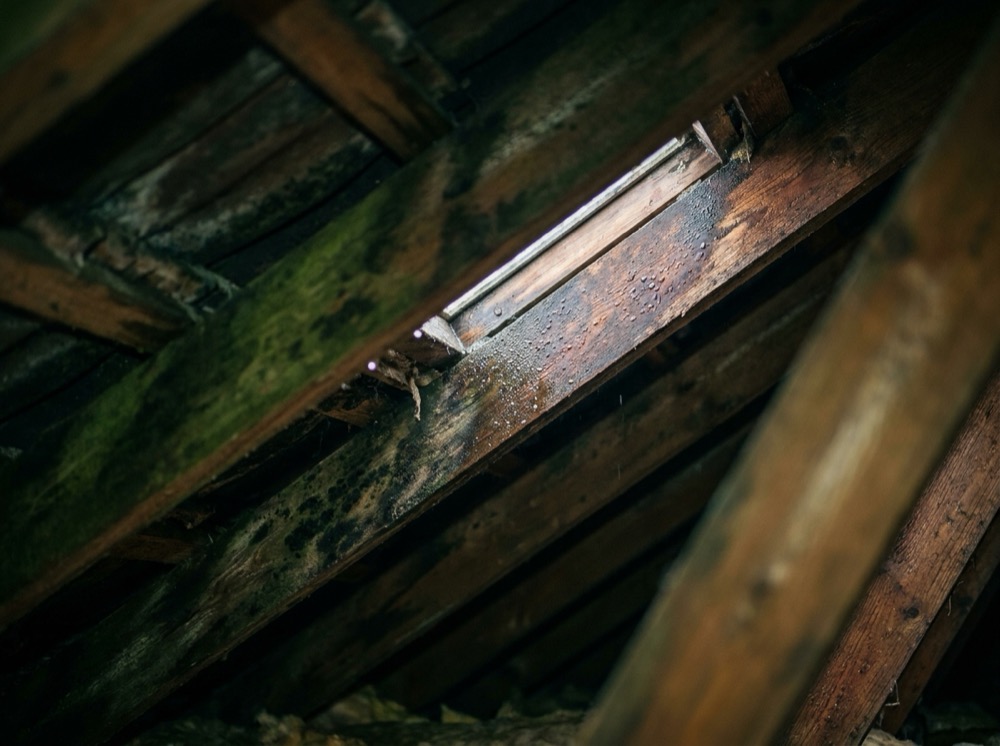
The problem isn't that the foam fails to insulate. It's that, bonded to the rafters, it hides the roof timbers so a surveyor can't inspect them, and open-cell foam can trap moisture that leads to damp and decay.
Because a mortgage is secured against the property, lenders need their valuer to confirm the roof is sound. If the foam makes that impossible, most lenders won't lend. Our guide to spray foam and mortgages explains the lender side.
What to do if you have it
If you're staying put with no plans to sell or borrow, and there's no sign of damp, there's no emergency, though it's worth keeping an eye on the loft. If you need a mortgage, remortgage or sale, the practical fix is professional removal to lender standard with a certificate. Our guide, is spray foam insulation bad, weighs it up honestly.
Check where you stand
Not sure what type you have or whether it needs removing? A free survey answers both. Check your eligibility in 60 seconds using the button below, and eligible properties can save up to 20% on removal.