Spray foam comes in two main types, open-cell and closed-cell, and they're not interchangeable. They differ in density, how they handle moisture, and how hard they are to remove. If you're dealing with foam in a roof, knowing which you've got tells you a lot about the problem and the fix.
Key takeaways
- Open-cell foam is soft, light and sponge-like but can absorb and trap moisture; closed-cell foam is dense, rigid and acts as a moisture barrier.
- Both types cause the same core mortgage problem: bonded to the rafters, they stop a surveyor inspecting the roof structure.
- The type affects removal. Closed-cell foam bonds harder and is tougher to strip, which is one reason a survey is needed before pricing.
What is open-cell spray foam?
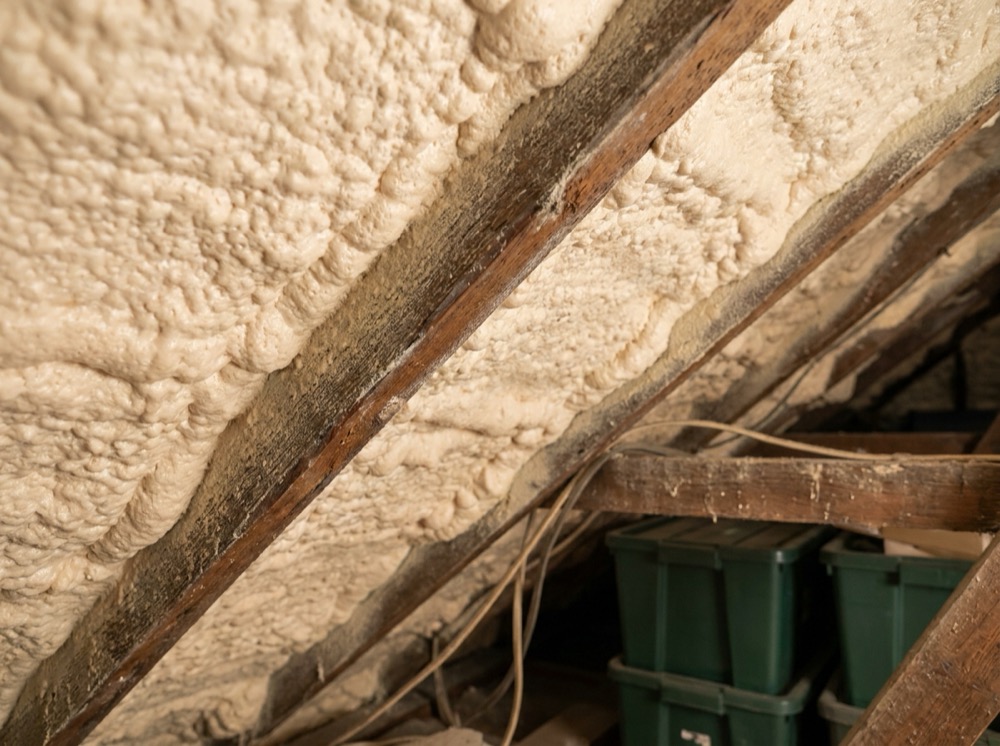
Open-cell foam is the softer, lighter type. Its cells aren't fully sealed, so it's less dense and has a sponge-like feel. It was often used in lofts because it's cheaper and expands to fill gaps well.
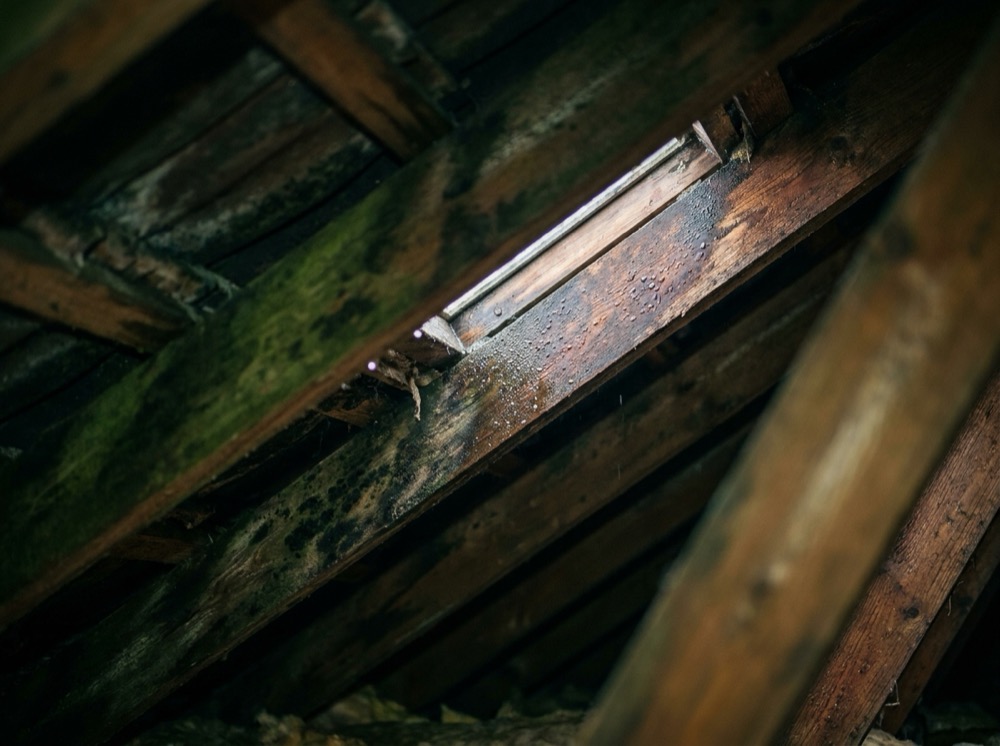
The downside is moisture. Open-cell foam can absorb and hold water, and when it's sprayed against a cold roof it can trap condensation against the timbers, which over time leads to damp and decay.
What is closed-cell spray foam?
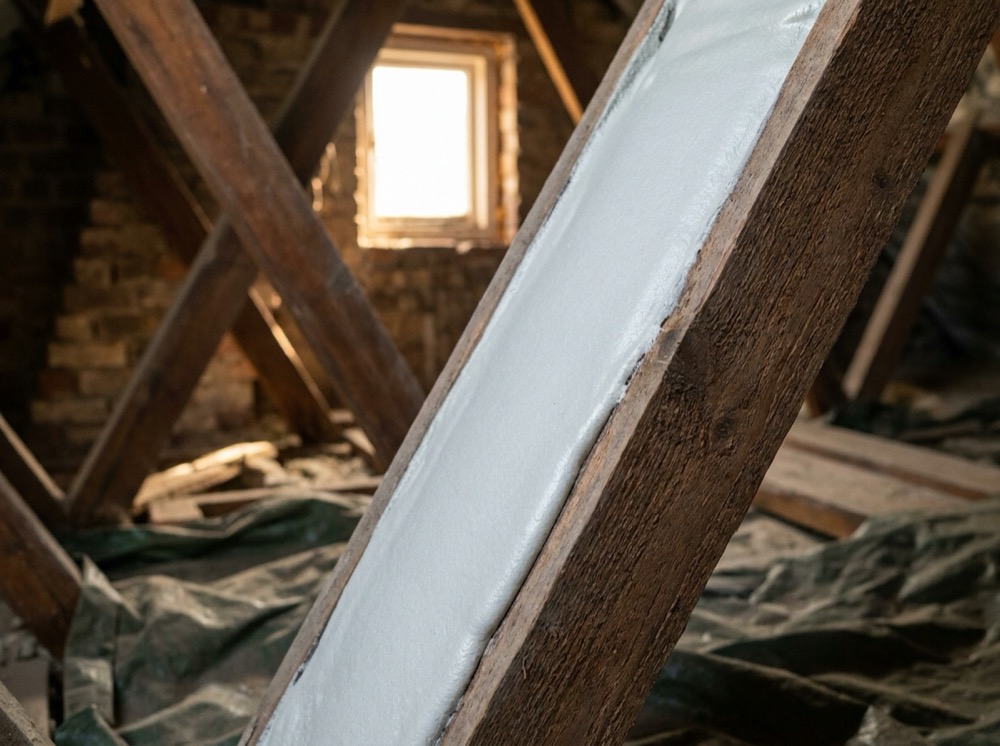
Closed-cell foam is denser and rigid. Its cells are sealed, so it acts as a moisture barrier and adds some structural stiffness to whatever it's bonded to. It's the higher-performance insulator of the two.
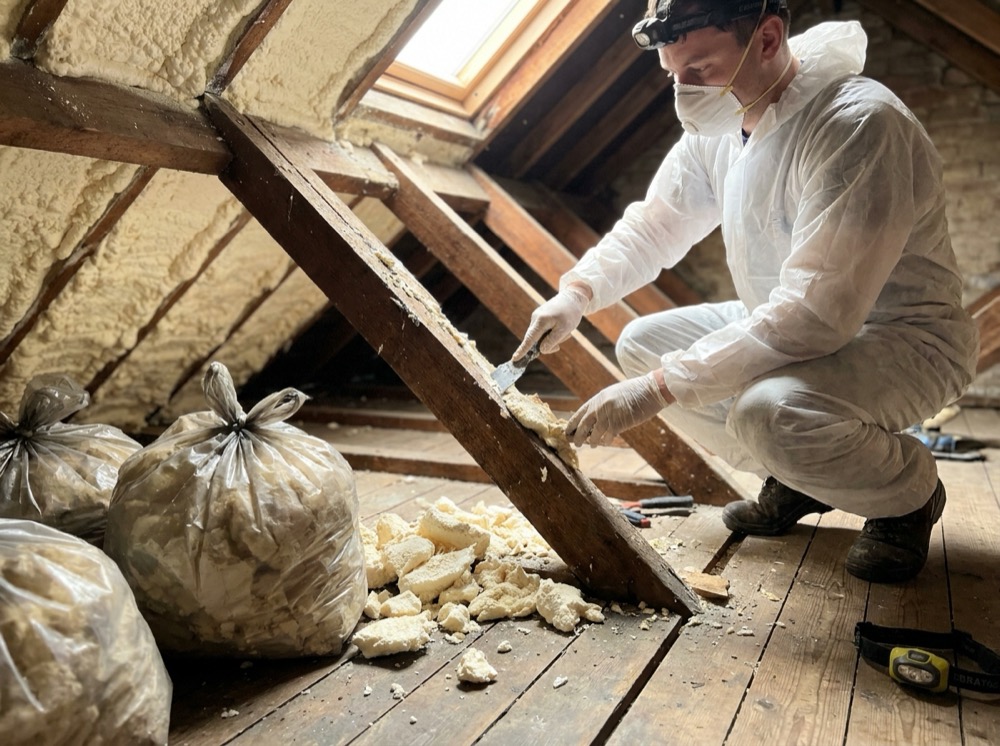
The trade-off is removal. Closed-cell foam bonds hard to the timbers, so stripping it out cleanly is more involved, and it's the type lenders tend to be strictest about.
Which is worse for mortgages and damp?
For mortgages, both are a problem, because the issue isn't the foam's chemistry, it's that either type bonded to the rafters stops a surveyor inspecting the roof. Most lenders treat the presence of foam as the red flag. See which lenders lend on spray foam for how that plays out.
For damp specifically, open-cell foam carries the higher moisture risk because it can hold water against the timber. Closed-cell is more of a removal challenge than a damp one. Either way, if it's in your roof and you need to sell or remortgage, it needs to come out.
How the type affects removal
Because closed-cell foam bonds harder, it takes more time and care to remove without damaging the rafters, which is part of why nobody can quote a fair price sight-unseen. A specialist confirms the type on a survey, then prices the job accordingly. Our spray foam removal service covers every type.
Not sure which type you have?
Most homeowners can't tell open-cell from closed-cell by eye, and you don't need to. A specialist identifies it on the free survey and explains what it means for your removal and your mortgage. Check your eligibility in 60 seconds using the button below.