Spray foam insulation is not inherently "bad", but in the roof of a UK home it now causes more problems than it solves. The single biggest one is that most mortgage lenders will not lend on a property that has it. Here is the honest picture, and what to do if you already have spray foam.
Key takeaways
- Spray foam insulation is not banned in the UK, but most mortgage lenders now refuse to lend on a property that has it in the roof.
- It hides the roof timbers from inspection and can trap moisture, which is why lenders treat it as a risk.
- If you need a mortgage, remortgage or house sale, professional removal plus a lender-ready certificate is the fix.
- With no plans to borrow or sell, and no damp or condensation, there is no emergency, but it is worth checking the loft.
What is spray foam insulation?
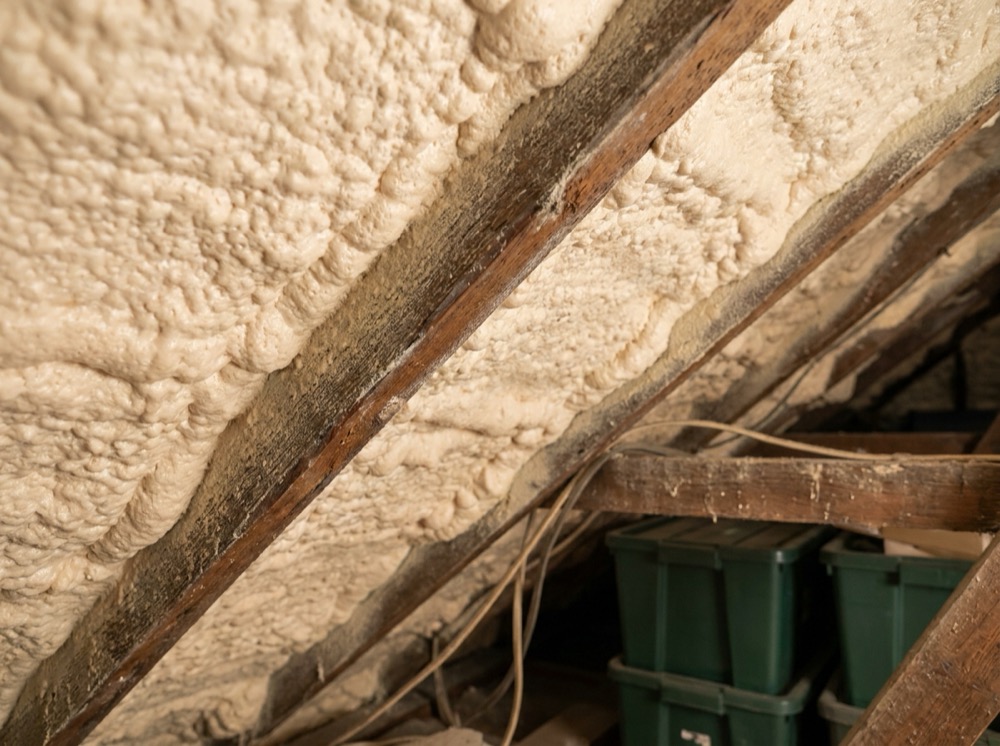
Spray foam is a polyurethane foam applied as a liquid that expands and sets hard. It comes in two types: open-cell (softer, more breathable) and closed-cell (denser, rigid, acts as a moisture barrier). In roofs it is usually sprayed onto the underside of the tiles or against the rafters.
The genuine benefits
To be fair to it, spray foam does some things well:
- Strong thermal performance. It seals gaps and reduces draughts better than loose or roll insulation.
- Air-tightness. It fills awkward shapes and hard-to-reach spots.
- Can add rigidity. Closed-cell foam stiffens a roof structure it is bonded to.
The real problems
The drawbacks are why it has fallen out of favour:
- Mortgages. Most UK lenders now decline or heavily scrutinise properties with spray foam in the roof. This is the deal-breaker for most owners. We cover it in full in our guide to spray foam and mortgages.
- Hidden roof condition. Foam over the rafters stops a surveyor inspecting the timbers for rot or defects.
- Trapped moisture. Especially open-cell foam, which can hold condensation against the timbers.
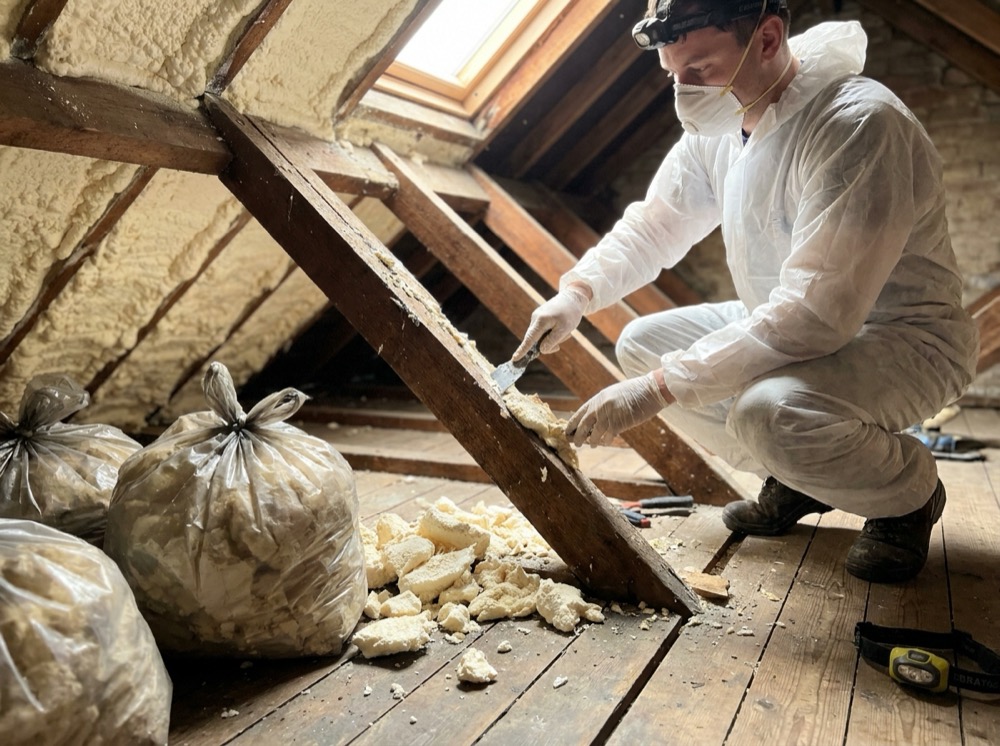
- Hard to remove. Closed-cell foam bonds tightly, making later removal more involved.
What to do if you already have spray foam
If you are staying put with no plans to sell or remortgage, there is no emergency, though it is worth checking for damp or condensation in the loft. If you need a mortgage, remortgage or sale, the practical route is professional removal to lender standard, followed by a certificate that surveyors and lenders accept. See our spray foam removal service for how that works.